
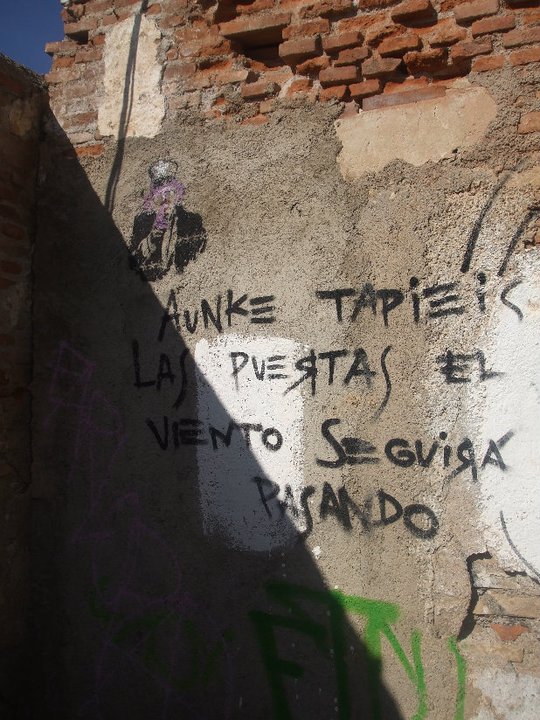
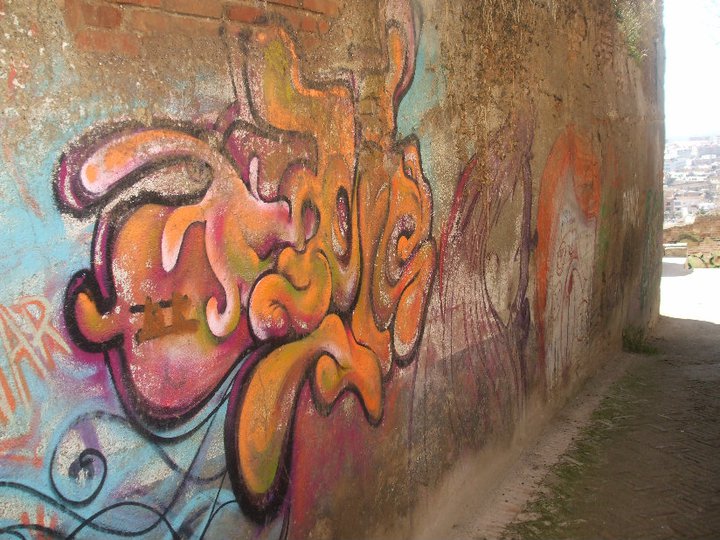
This weekend the thirteen students, my resident director and her husband ventured to Granada and Córdoba. We took the fast train and spent the most beautiful three days in these cities (save the rain that came in Córdoba just in time for our taxi ride to the Renfe station). Friday afternoon we explored around the Albaicín, the Old Arab Quarter, continually walking up steep cobblestone paths and taking in the scenery.
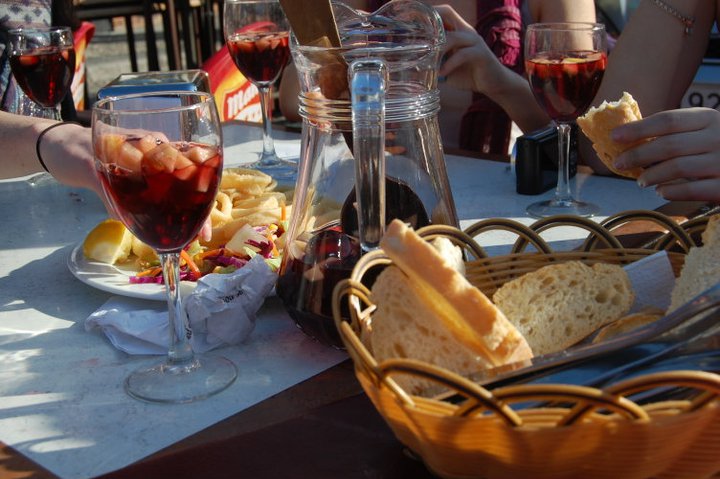
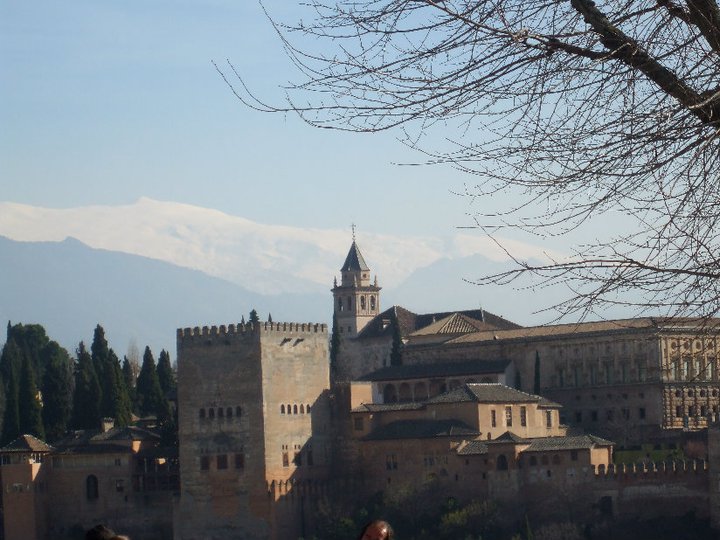 It was quite literally breathtaking; to not only see the city below, and the snow-capped Sierra Nevada enveloping the Alhambra right at eye-level, but also for me, with my years of athleticism in handling a remote control and keyboard, physically climbing up the stairs and ramps. And so starts my desire to add some running into my siesta. There were many patios and restaurants, where hippies and gypsies roamed amongst the potent smell of pot and incense. The group stopped for sweet sangria and fried calamari and eggplant, listening to the street performers and basking in the sun. It was the perfect afternoon.
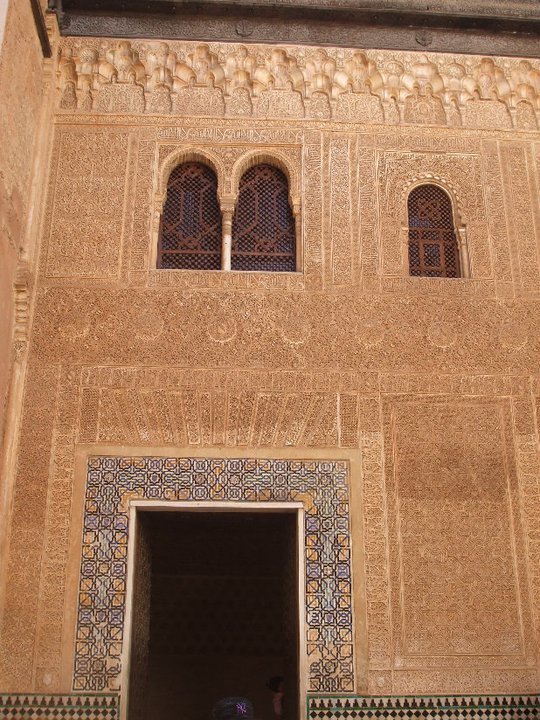
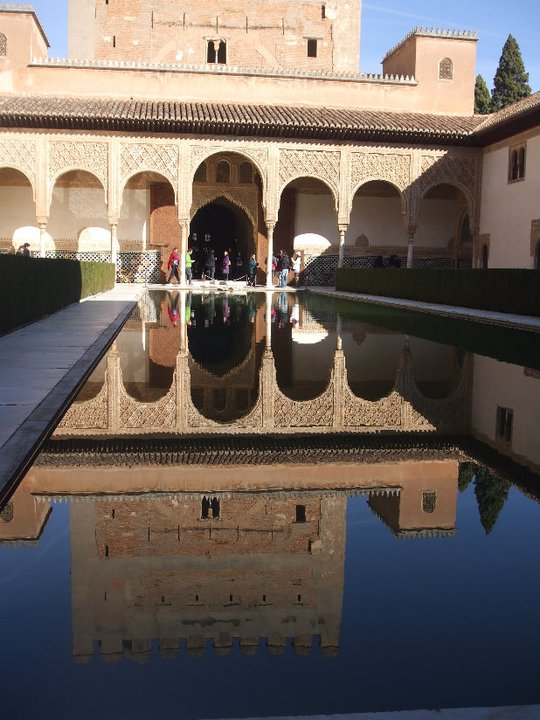 The Alhambra is big on reflections and all the symbolism that they inspire. The guide emphasized the importance of water and it’s many functions, the miracle of their aqueducts, the flawless mirror quality of the Alhambra’s picturesque pool of water and the infinite properties of the meticulously intricate (yes, I know I am being repetitive, and redundant, but I can go on forever) Arabic designs that line the walls. In a grander sense, my experience in Granada was composed by a mirror image; seeing the Alhambra from the look-out point in the Albaicín, and viewing the Albaicín from the Alhambra’s windows.

Orange trees are all over the city, but our tour guide through the Alhambra told us only the tourists are tan tonto (foolish enough) to eat them. Rule of thumb? If you are able to pick them, they will be sour. In the Generalife, which is the Architect’s (God’s) Garden, outside the Alhambra, our tour guide brought us to what was supposed to be the most romantic spot on site. By this fountain, there is a tree that legend has it, when touched, will point you towards your “media naranja,” or better half. I love this expression for soul mate. The public is prohibited from touching it these days, in order to discourage the lonely hearts club coming in droves.
 What I take from this trip, and these rules, is that if you want to find something sweet, in the form of fresh fruit or be it your soul mate, you just have to wait. Anything that is easy to grasp won’t be quite worth the time saved in getting it. The best things in life are worth the wait, and just beyond reach.
 Which leads us to the transportation snafus of Córdoba. Between enigmatic buses to and from the ruins of el empiro escondido Medinat az-Zahra, which only lasted 80 years, and having to beg taxis to cram onto the narrow street of our hostal as it began to rain when we left for the train (because the rain in Spain falls mainly on the plain, right?), and finally not being able to get on to the correct Renfe train car and having to sit by the bathrooms and in the snack car, the old Yiddish proverb came to mind Mann traoch, Gott Lauch: Man plans, God laughs. Ironically enough, these issues of waiting for rides caused us to miss the Arte Zoco and Synogogue in the Judería before it closed.
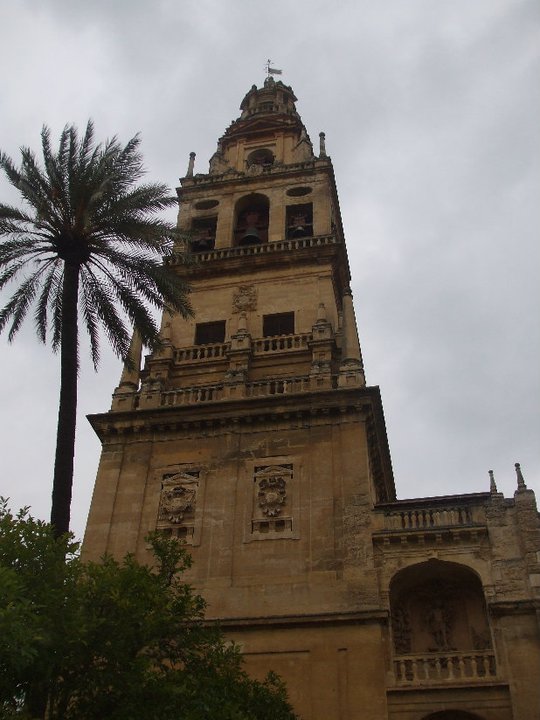
 Luckily, we did *eat* in the Jewish Quarter, making me feel as though I connected to my ancient heritage on some level. Just like our lunch in Granada at an Italian/English eatery run by quite possibly the sweetest British cook in Spain, we were also pleasantly surprised by our tapas and Arabian tea and coffee in the Judería before we visited la Mezquita. The mosque-turned-Cathedral, unique in that it still retained its Muslim architecture, design, and relics, was a touching, yet simultaneously haunting example of respect in regard to other religions, in the face of adversity and warfare. There is no getting around it’s history that it was taken over and converted, yet, Christian masses only take place in the reconstructed addition, and the Muslim establishment and artifacts remain astoundingly intact.
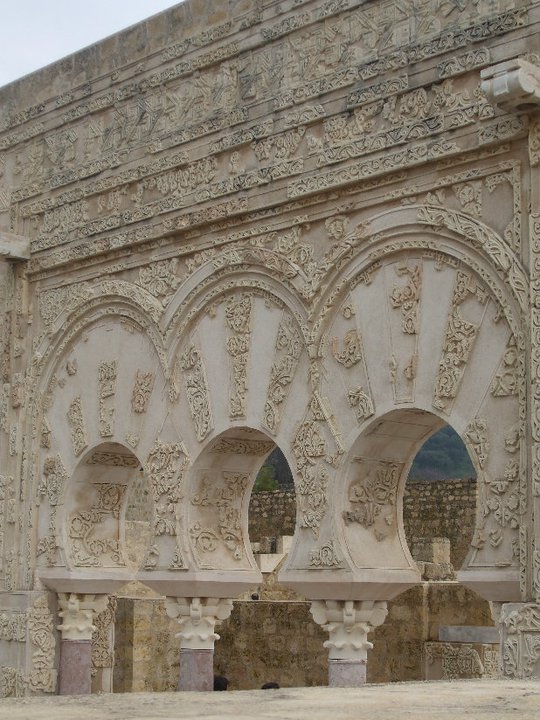 Most every building in Spain that I have encountered, whether it be religious or secular, private or public, hundreds of thousands of years old (in ruin) or newly erected, they all sustain impeccable detail and delicate sculture and inscriptions, beyond anything I have ever seen at home. I can’t get over how many buildings in Spain have more than one life-size statue of a man, or woman, God or Goddess. They are more than shelter, but thoroughly houses of art, in content and construction. You see it in pictures and you hear the accounts of friends who have been there before you, but until you are standing in front of them, craning your neck to get the perfect shot, it’s an impossible concept to wrap your head around.




 Hilary Weissman

Leave a reply to Dydy Cancel reply